

Earth’s magnetic field is often described as an invisible shield, so the obvious question sounds terrifying: if that shield suddenly vanished, would the planet become uninhabitable?
Not immediately. Satellites, astronauts, navigation systems, and the upper atmosphere would face the biggest early changes, while people at sea level would still have a powerful layer of protection above them: the atmosphere itself. The long-term story would be more serious, but also much slower and more complicated than the familiar idea that the solar wind would simply blow Earth’s air away.
There is one important caveat. Earth’s main magnetic field is produced by moving electrically conducting iron in the liquid outer core, a self-sustaining geodynamo. In reality, that global field cannot simply switch off in an instant. So this is a thought experiment, not a scenario scientists expect to happen.
What Would Happen in the First Minutes?
The most immediate change would be simple: ordinary magnetic compasses would stop having a reliable global north to follow. Animals that use Earth’s magnetic field as one of their navigation cues could also be affected, although biological navigation usually combines several senses rather than relying on magnetism alone.
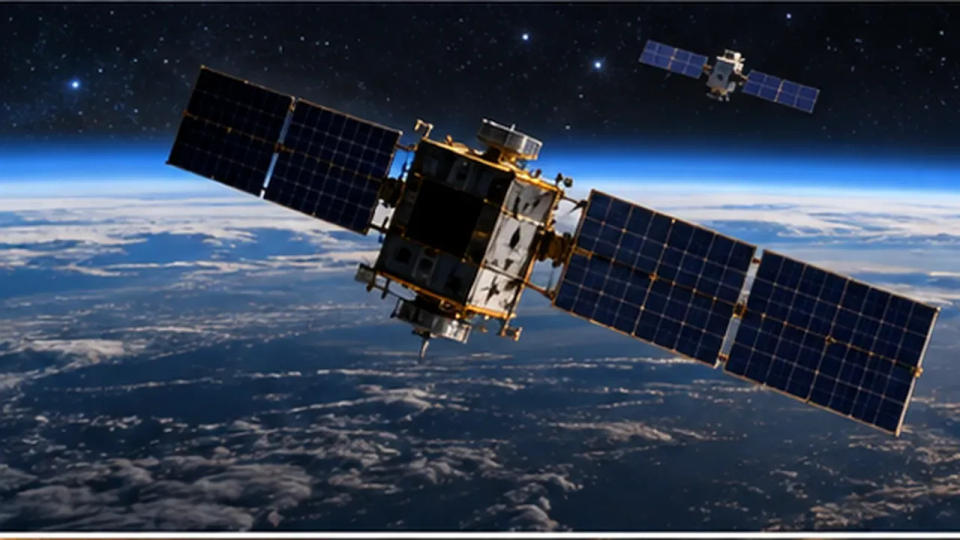
Far above the surface, the change would be much more dramatic. Today, Earth’s magnetosphere forces much of the solar wind around the planet. Without the internally generated global field, that familiar teardrop-shaped magnetosphere would collapse and the solar wind would interact much more directly with the ionosphere and upper atmosphere.
That does not mean Earth would have no magnetic barrier at all. Venus and Mars show that a planet without a strong intrinsic global field can still develop an induced magnetosphere. The solar wind carries its own magnetic field, and when it meets a conducting ionosphere it can drape magnetic fields and currents around the planet. Earth’s space environment would therefore reorganize rather than become magnetically empty.
If the field truly vanished extremely quickly, the rapid change in magnetic flux would itself induce electric fields and currents. Because an instantaneous shutdown is physically unrealistic, there is no single meaningful number for how destructive that electromagnetic pulse-like transition would be. The faster the hypothetical change, the more important that transient effect becomes.
Which Technologies Would Notice First?
Spacecraft would be near the top of the list. Earth’s magnetic environment does not block every energetic particle, but it strongly shapes where charged particles can travel. With the global field gone, satellites would face a very different radiation and charging environment, especially during solar energetic-particle events. Electronics could suffer more single-event upsets, solar arrays could degrade faster, and mission operators would need new radiation-hardening and forecasting strategies.
Astronauts outside the dense lower atmosphere would also lose an important layer of protection. Crews in low Earth orbit currently operate inside much of Earth’s magnetic environment, even though they still receive more radiation than people on the ground. Without that global field, solar particle storms would become a larger operational hazard.
Radio communication and satellite navigation could become less predictable because both depend on signals passing through the ionosphere. NOAA’s modern space-weather scales already show how severe solar activity can disrupt GPS, high-frequency radio, spacecraft operations, and power systems. With no global magnetosphere, those interactions would no longer follow the patterns engineers use today.
Power grids deserve a more careful answer. Present-day geomagnetic storms create changing currents in the magnetosphere and ionosphere that can induce currents in long transmission lines. A planet with no global field would not simply experience a permanent version of today’s geomagnetic storms; the coupling mechanism would be different. The sudden disappearance itself could induce large currents, but the later grid risk would have to be modeled for the new solar-wind–ionosphere system rather than assumed to be automatically worse in every situation.
Would Life at the Surface Be in Immediate Danger?
No. This is where many fictional versions of the scenario go too far.
The atmosphere is an enormous radiation shield. It absorbs most harmful ultraviolet radiation through atmospheric chemistry, especially ozone, and it also stops or degrades many incoming charged particles before they reach the ground. Earth’s magnetic field is especially important for controlling charged particles in space, but losing it would not remove the air above our heads.
Radiation exposure would rise most clearly in space and at high altitude. More lower-energy charged cosmic particles could reach the atmosphere at latitudes that are currently protected by Earth’s magnetic cutoff, so airline crews and passengers on some routes could see higher doses. At sea level, however, the atmosphere would continue to provide substantial protection. The surface would not suddenly become a lethal radiation zone.
Auroras would change too. Today, Earth’s field funnels many energetic particles toward high magnetic latitudes, which is why auroras cluster around the poles. Without a global dipole, that organized polar geometry would disappear. Upper-atmospheric glows could still occur where solar-wind particles and induced magnetic structures interact with atmospheric gases, but they would not behave like the familiar northern and southern auroral ovals.
This is also very different from a magnetic reversal. During real reversals, Earth’s field can weaken and become more complicated, but it does not simply vanish. NASA notes that the atmosphere and the remaining magnetic environment continue to protect the planet, and there is no evidence that known past reversals caused global biological catastrophes.
Would Earth Slowly Lose Its Atmosphere?
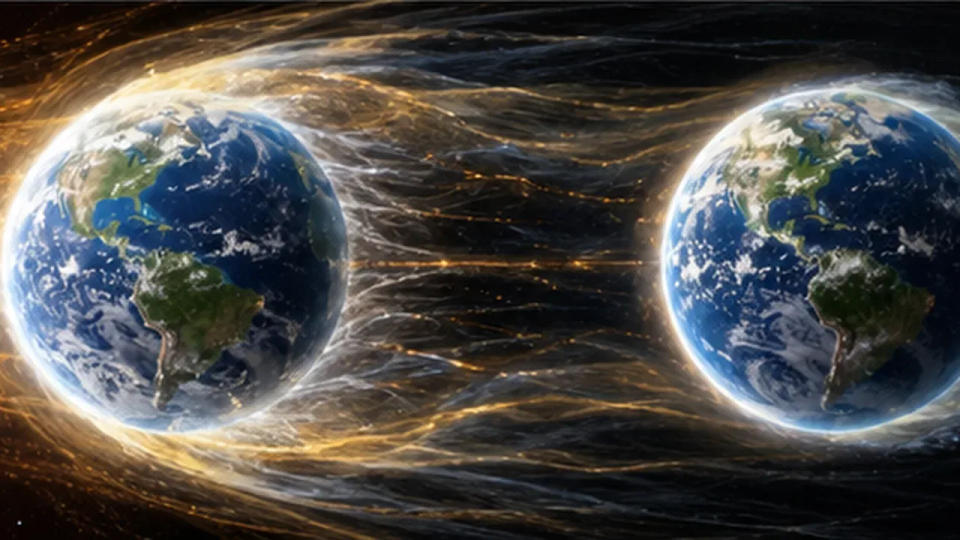
This is the most interesting part of the thought experiment because the common answer—“Earth would become Mars”—is too simple.
Mars lost its ancient global magnetic field billions of years ago, and NASA’s MAVEN mission has shown how the solar wind interacts with the Martian upper atmosphere and contributes to atmospheric escape. That history makes Mars a useful warning. But Mars is also smaller than Earth, has weaker gravity, and followed a very different thermal and atmospheric history.
Venus provides the opposite caution. It has no Earth-like internally generated global field, yet it retains an extremely dense atmosphere. Research comparing atmospheric escape from Earth, Mars, and Venus has even challenged the idea that an intrinsic magnetic field automatically reduces total atmospheric loss. Magnetic fields can block some escape pathways while opening or enhancing others, such as escape through polar regions.
So an unmagnetized Earth would probably experience a different balance of atmospheric escape processes, and direct solar-wind interaction with the upper atmosphere would matter more. But the atmosphere would not be stripped away in days, years, or likely even human historical timescales. Gravity, atmospheric composition, solar activity, the ionosphere, and the induced magnetosphere would all help determine the result over geological time.
In other words, the magnetic field is important for habitability, but it is not a simple on-off switch for keeping an atmosphere.
Conclusion
If Earth suddenly lost its magnetic field, the first crisis would be technological and space-based rather than an instant extinction event on the ground. Satellites, astronauts, navigation, radio systems, and the upper atmosphere would face a radically new environment, while the atmosphere would continue shielding surface life from much of the incoming radiation.
Over much longer timescales, atmospheric escape could change in important ways, but Earth would not transform into Mars overnight. The real lesson is that planetary protection comes from a system—magnetic field, atmosphere, gravity, ionosphere, and solar environment—not from one invisible shield working alone.
Sources & Further Reading
- NASA Science — Magnetospheres
- NASA Science — Earth’s Magnetosphere: Protecting Our Planet from Harmful Space Energy
- U.S. Geological Survey — How Does Earth’s Core Generate a Magnetic Field?
- NOAA Space Weather Prediction Center — NOAA Space Weather Scales
- Astronomy & Astrophysics — Why an Intrinsic Magnetic Field Does Not Protect a Planet Against Atmospheric Escape
Post a Comment